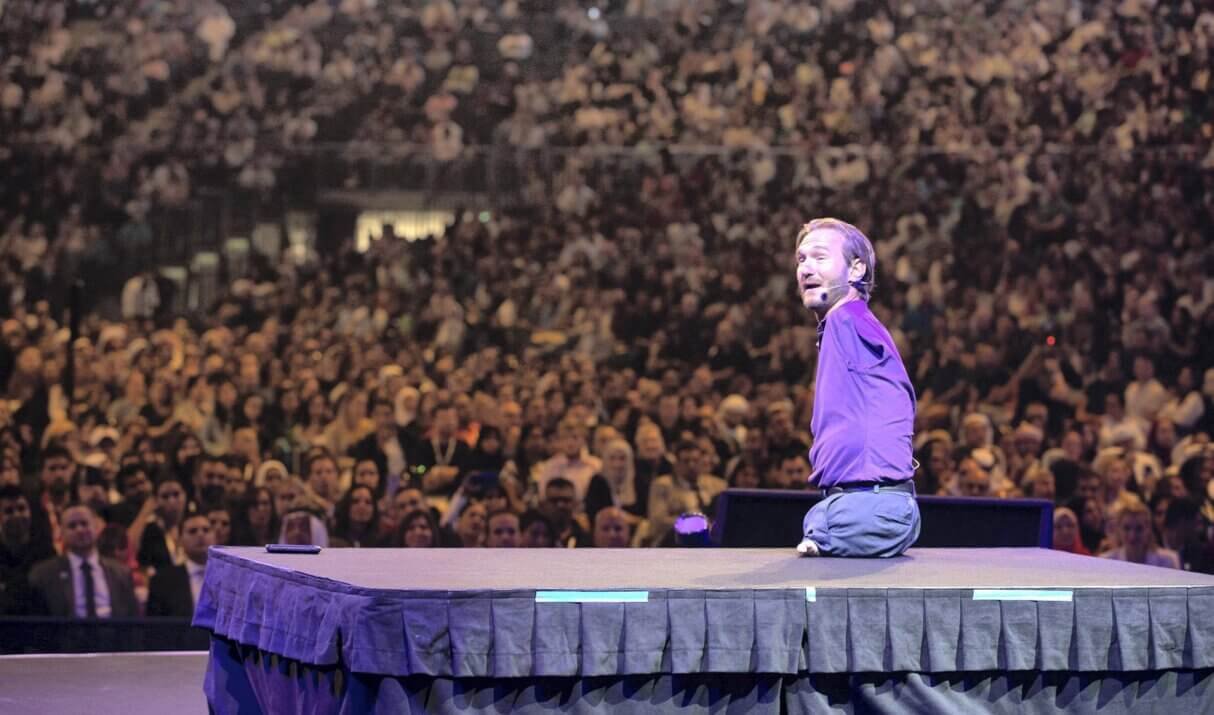

Born in 1982 without arms or legs, Nick Vujicic’s early life was defined by limitation and profound loneliness. Bullied, isolated, and battling suicidal thoughts, he saw no future for himself. But at 17, everything changed. He realized his purpose wasn’t tied to his body, but to something within. He began to speak, sharing a message of hope that started in small prayer groups. Today, Nick is a globally renowned motivational speaker and evangelist, married with four children. He swims, paints, and has inspired millions. His journey re-echoes a powerful truth, “Your ability to impact the world is not physical – it is innate”. You are perfectly created for a purpose that goes far beyond what you have or don’t have on the outside.

Even after 62 years of independence, Ghana’s dream of equal education for all remains unfulfilled. Through the story of Nzulenzu — a beautiful town built on water — this article exposes the harsh realities of rural education and calls for a renewed commitment to fairness, access, and opportunity in Ghana’s educational system.

This insightful article breaks down the complex causes behind Russia’s invasion of Ukraine. From the fall of the USSR to the secession of Donetsk and Luhansk, and the role of the “Responsibility to Protect” doctrine, Kwame Obeng sheds light on the geopolitical motivations and legal implications of one of the most defining global conflicts of our time.
Building on Part 1, this article delves into what international law says about one state invading another. Using Articles 2(4) and 51 of the UN Charter, Kwame Obeng analyzes how the rules governing sovereignty, self-defence, and the use of force shape our understanding of Russia’s invasion of Ukraine — and whether such action can ever be justified.
In this continuation of the Russia–Ukraine analysis, Kwame Obeng examines whether Russia’s invasion is justified under international law. Drawing on UN Charter Articles 2(4) and 51, and comparing past global conflicts like Libya and Iraq, this piece explores the legality, logic, and moral weight behind President Putin’s claims of self-defence, humanitarianism, and “de-nazification.”