EXPLANATION TO RUSSIA’S INVASION OF UKRAINE – PART 2A

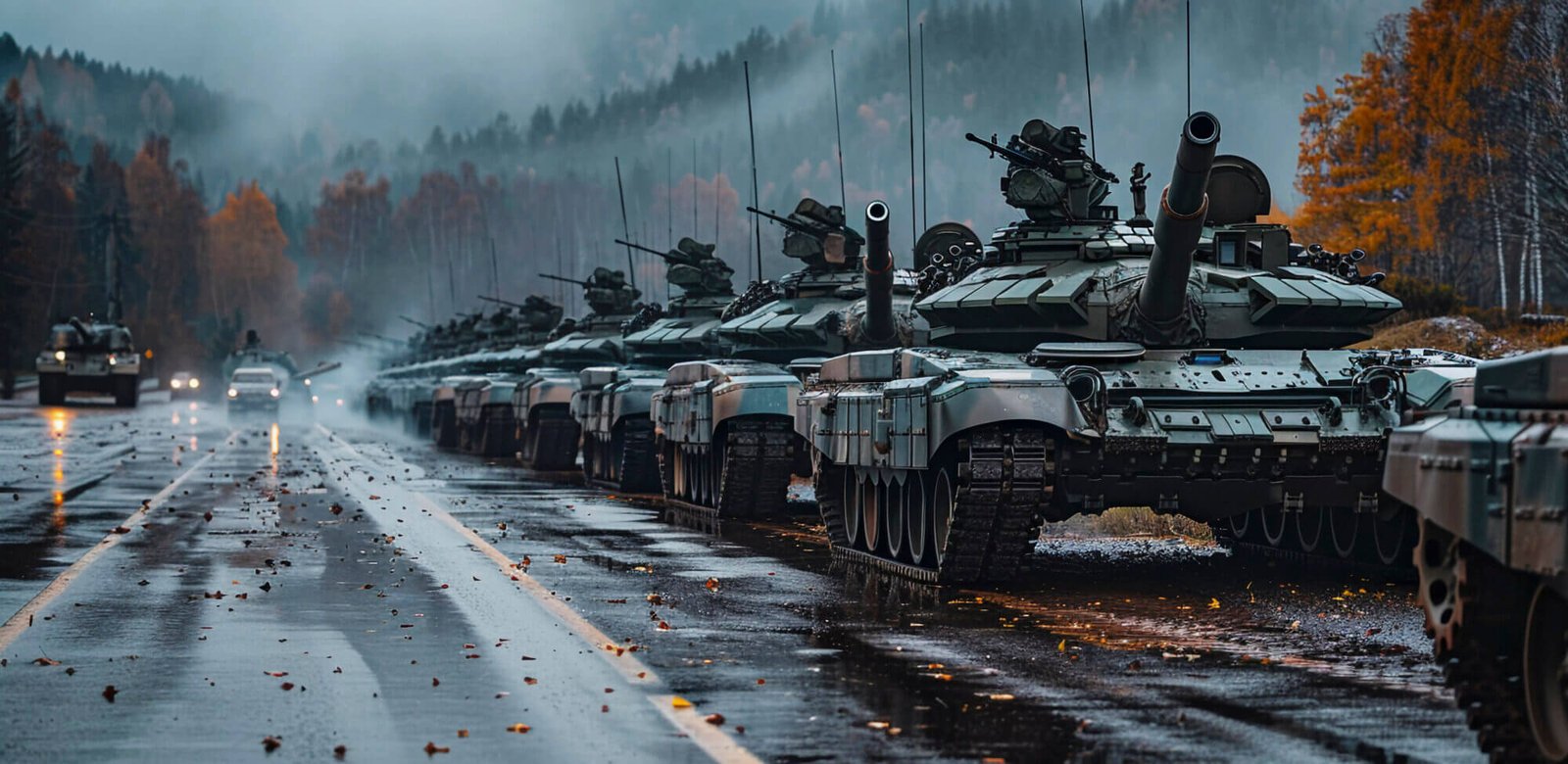
This is Part 2 of my write up which seeks to educate readers on what Russia’s invasion of Ukraine mean. Today my objective is to chronicle what international law says about one country invading the territorial integrity of another using the Russo-Ukranian War as a classic case. Particularly, I will use Article 2 (4) and Article 51 of the UN Charter as refence.
In the continuation of this write up (Part 2B), I will then measure Russia’s reasons for the invasion against the provisions set out in the current Charter and see, if they are justified or not. The last part of this article (Part 2C) will then highlight the possible sanctions Russia could face if their actions are unjustified, a stance the UN has already taken.
Intro
One of the foremost assertions I want to make is, the international system as we have it now, is shaped by the experiences of the past. Put differently, the international system is a product of lessons learnt from the various events that the international community witnessed in the past particularly, the World Wars.
For example, following the scourge of World War II and how devastative it was, world leaders vowed never to witness such a war again hence, formed the United Nations (UN) to succeed the failed League of Nations with the ultimately goal of championing world peace and security.
The United Nations then came up with a Charter (Constitution) that outlined various principles that member states should uphold and comply with by way of ensuring world peace and security. I will want to re-echo that, the UN carefully adopted each word in its charter because of its past experiences although there are some words that seem to be ambiguous (I will show soon).
Having laid this background, I will proceed to talk about what the UN Charter say about invasion or a country using force against another country. It is also important to know that the UN through the General Assembly (GA) voted on 2nd March 2022 to denounce Russia’s invasion of Ukraine which they called an ‘aggression’ meaning, the wrongful use of force against the territorial integrity of another state. In view of that, the words ‘use of force’ and ‘invasion’ will be used interchangeably to convey the explicit message the write-up seeks to communicate.
What The Un Charter Say on the Use of Force / Invasion
Before I talk about what the UN Charter say on invasion, it will be prudent to situate it in context hence, a brief historical background to where the charter evolved from will do us much good. The reason is that, prior to World War I, there was no outright ban on the use of force by one state against another state.
Instead, there was a doctrine that justified why another state can use force to invade another state’s territory called, the Just War Theory.
The Just War Theory
The just war theory was a notion commonly held by the early Roman empire. The doctrine has it that, it is good for one country to attack the subjective guilt of another country when the latter wrongs the former and, do not regret of its action. Simply put, the doctrine of the just war theory permits an offended state to attack and punish the subjective guilt of the offender and take back its due if the offender state repents not of its actions by way of ensuring peace. The doctrine was first espoused by St. Augustine and much later in the 13th century by St. Thomas Aquinas. Consequently, the First World War broke out in Europe in 1914.
The Kellog-Briand Pact
The Kellog-Briand Pact of 1928 was the first global agreement that placed an outright ban on the use of force by one state against another. The pact recommended diplomatic means of resolving conflicts among states rather than using war. The pact was co-sponsored by the US and France hence, named after the US Secretary of State Frank B. Kellog and, the French Foreign Affairs Minister, Aristide Briand.
Some scholars opine that, the League of Nations which was founded in 1920 after the World War I did not put an outright ban on the use of force by States. According to these scholars, the League of Nation’s approach was that, if a state wrongs another state, the state that committed the act of wrong have 3 months to settle that issue. The idea was that, after 3 months the dispute will be settled and tempers would calm down hence, there will be no war. However, after the three months if there is no settlement of the dispute, then force could be used.
It is therefore not surprising that, the second world war consequently broke out in 1939 although the Kellog-Briand Pact which was later adopted sought to help prevent another world war.
The Era of the UN Charter
Following the demise of the failed League of Nations, the United Nations was established to promote world peace and security as Article 1 of its charter enshrines. Like I noted earlier, the UN was established based on the dysfunctionalities of the League of Nations to avoid the occurrence of a possible third world war which predominantly is likely to occur when one country invades another to threaten its territorial integrity just as the two world wars evinces.
Having said that, let’s proceed to look at what the UN Charter which drew inspiration from the Kellog-Briand Pact of 1928, say on invasion or the use of force.
Undoubtedly, at least two important articles in the UN Charter suffice when it comes to the issue of invasion or the use of force by one state against another. Specifically, they are Article 2(4) and Article 51. Let’s see what each article says, then juxtapose it with Russia’s reasons for invading Ukraine then we can conclude whether Russia is justified or not.
An interesting fact you will come to realise soon is that although the U.N does not approve use of force against another state, it also does not place an outright ban on it but makes special provisions under which it can be used.
UN CHARTER – ARTICLE 2(4)
All Members shall refrain in their international relations from the threat or use of force against the territorial integrity or political independence of any state, or in any other manner inconsistent with the Purposes of the United Nations.
Although some scholars believe that some wordings used in this article is shrouded in some form of ambiguity, I believe the objective meaning of this article is explicit or clear. Thus, it cripples all members from using threat or actual use of force to destabilize the territorial integrity of another state. The reason is that it will jeopardize world peace and security, a purpose the UN was established to ensure.
Un Charter – Article 51 (Self Defence)
Nothing in the present Charter shall impair the inherent right of individual or collective self defence if an armed attack occurs against a Member of the United Nations, until the Security Council has taken the measures necessary to maintain international peace and security. Measures taken by Members in the exercise of this right of self defense shall be immediately reported to the Security Council and shall not in any way affect the authority and responsibility of the Security Council under the present Charter to take at any time such action as it deems necessary in order to maintain or restore international peace and security.
This article unlike the previous article justifies when force can be used against another state. It premised the justification ‘only on condition of collective self defence when an armed attack has been used against a member state’.
It is also important to note that, per this article, it is only the UN Security council that can sanction the use of force against another state just as it did in 2011 against Brother Muammar Ghaddafi. Hence, for Russia to invade Ukraine in the name of self-defence when there is no proof of an armed attack against them by the former, leaves so much to be desired.
One interesting thing I will want to highlight although I will not delve deep to discuss is that scholars of law think article 51 is quite problematic because, the UN failed to define some wordings that were used in this article such as ‘armed attack’. The reason is that armed attack can be actual or pre-emptive or anticipated. Literally, the non-definition of that word, puts the world in a state of dilemma because, it brings the question of for instance, “do you make an advance to first attack an enemy you know will attack you when he gets the chance, or you will have to wait for him to attack you first before you retaliate?” What if after receiving the attack, you are unable to survive to even retaliate? What if you attack him first unprovoked by way of self-defence thinking, he is planning to attack you when in fact, that is not his intention?
As interesting as these questions may seem, that is one of the controversies Article 51 of the UN Charter left us in, on the use of force which Russia can tacitly hide behind. Although various law scholars have attempted to argue it out, I will not go into details regarding their positions. We will now procced to answer the question of whether Russia’s invasion of Ukraine is justified or not.
Is Russia’s Invasion Justified?
In Part 2B, we will measure Russia’s reasons for the invasion against these Articles and see if Vladimir Putin is justified or not?